CareID Resources
Emergency ID Planning for Autism and Communication Support
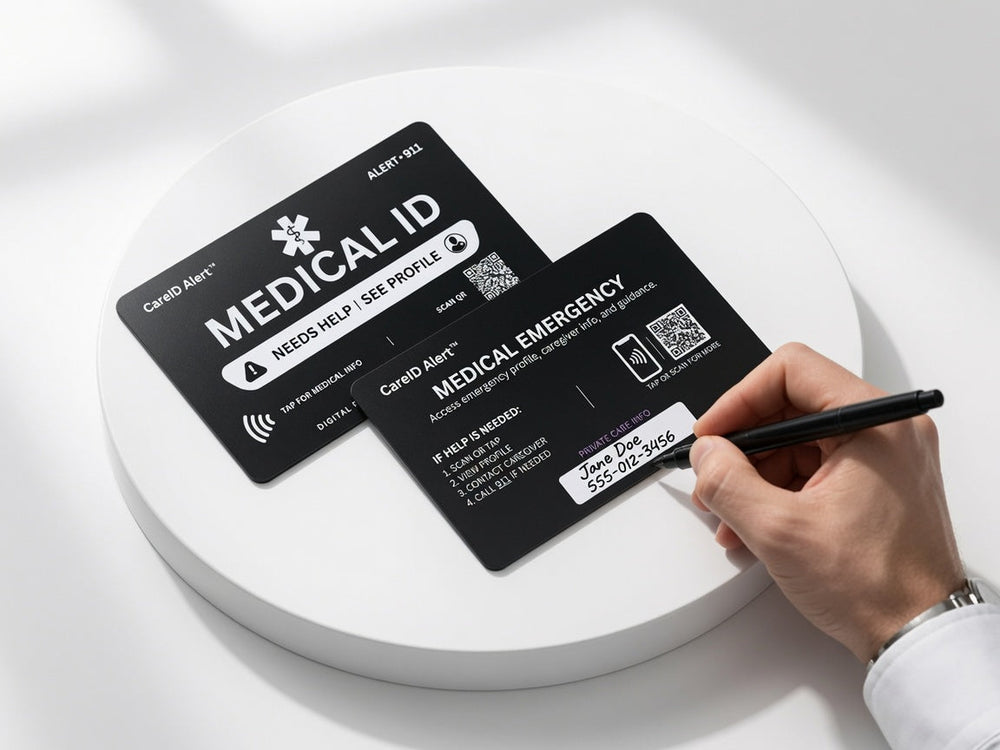
An autistic person may communicate, process information, or respond to stress differently during an emergency. Some people speak fluently. Some use limited speech, writing, gestures, pictures, or a communication device. Some may understand far more than they can express in the moment.
An emergency ID should not reduce the person to a diagnosis. Its purpose is to give a helper clear, respectful information that supports safety and communication.
Start with the person’s actual needs
There is no single autism emergency profile that fits everyone. Build the information around the individual rather than around assumptions.
Useful questions include:
- How does the person usually communicate?
- How should a helper ask questions?
- What signs show that the person is overwhelmed or in pain?
- What sensory input should be reduced?
- Is physical touch likely to increase distress?
- Is there a wandering or elopement risk?
- Who should be contacted first?
Keep communication instructions short
A helper needs directions that can be understood in seconds. Examples of useful profile language include:
- “Speak slowly and use one instruction at a time.”
- “Allow extra time for a response.”
- “Do not assume lack of speech means lack of understanding.”
- “Avoid unnecessary physical contact.”
- “Offer the communication card in the front pocket.”
Use wording approved by the person or caregiver. Avoid labels that are vague, stigmatizing, or likely to be misunderstood.
Include sensory and regulation support only when useful
Noise, flashing lights, crowds, alarms, or repeated questions can make communication harder. A concise profile can tell a helper what tends to reduce distress, such as moving to a quieter space, lowering voice volume, giving physical distance, or allowing a familiar support item.
This information should support immediate safety. It does not need to become a long behavioral history.
Plan for wandering or separation
When wandering or elopement is a concern, emergency identification may need:
- A primary caregiver phone number
- A backup contact
- A recent photo
- A preferred name
- Safe-return information
- Known hazards, such as attraction to water or traffic
- Calm approach instructions
Only include location information that is reasonably necessary and that the authorized caregiver is comfortable making accessible through the emergency profile.
Choose the right CareID information level
A Condition-Ready CareID opens general autism and communication-support guidance without adding personal identity or medical information.
A Personalized CareID can add the person’s approved communication needs, caregiver contacts, safe-return details, allergies, medications, and responder notes.
For someone who may be unable to provide their name or contact information during stress, a personalized profile is generally more useful than condition guidance alone.
Use more than one access point
Place emergency identification where it is likely to remain with the person. Depending on daily habits, that may be a visible CareID Bracelet, a CareID Card, or Digital CareID paired with a physical backup.
Practice finding and opening the emergency information with family members, school staff, support workers, or other authorized caregivers.
Review the information regularly
Update contacts, medication information, communication methods, and safe-return details when they change. The person’s preferences and abilities can also change over time.
CareID’s general Autism & Communication Support Emergency Guide provides bystander guidance. CareID’s guide review standards are described on the Medical Review Process page.
No CareID app or login required for the person helping. No required subscription.
This article provides general planning information. It is not individualized medical, behavioral, legal, or emergency advice.